














Before changing their management software, almost every company asks the same question: do we buy something that already exists, or have something built to our own specification? There is no single right answer. It depends on how unusual your way of working is, how much it would cost you to adapt to someone else's software, and how much weight that process carries in your business. Here are the criteria for deciding without being swayed solely by the entry price.
What each option means
It helps to clarify the terms first, because in practice there are three options, not two:
- Off-the-shelf software. A program built for many companies at once: accounting, payroll, general invoicing. You can configure it, but you cannot change how it works.
- Bespoke software. A program developed for your specific process. It does what you need, the way you need it, and does not come with features you will never use.
- Configurable industry-specific software. A program designed for a particular sector (concrete, agriculture, construction…) that adapts to each company through configuration and, where necessary, bespoke development on top. It is the middle ground that many companies overlook.
When off-the-shelf software makes sense
A standard program is usually the best choice when the process is the same for every company or is dictated by regulations. Accounting and payroll are the obvious examples: the rules are common to all, and what matters is that the software keeps up with legal changes.
It also fits when:
- Your way of working does not set you apart from your competitors in that area.
- You are prepared to change how you do things in order to follow the software's approach.
- You need to get started now and cannot wait for a development project.
- Nobody on your team can spare the time to analyse requirements for a bespoke project.
The risk with off-the-shelf software appears when a company only half adapts: the program covers one part and the rest goes back to Excel, paper or a notebook. If the part left out is precisely the important one, the initial saving is lost in duplicated work.
When bespoke software pays off
Bespoke development makes sense when the process is unique to your company and gives you an edge, or when no program on the market covers it without workarounds. Some warning signs:
- You have already tried off-the-shelf programs and ended up with spreadsheets around them to cover what they do not do.
- Your process depends on specific machines (weighbridges, batching plants, readers) whose data you have to retype.
- You work with several programs that do not talk to each other, and someone spends their time moving data from one to another.
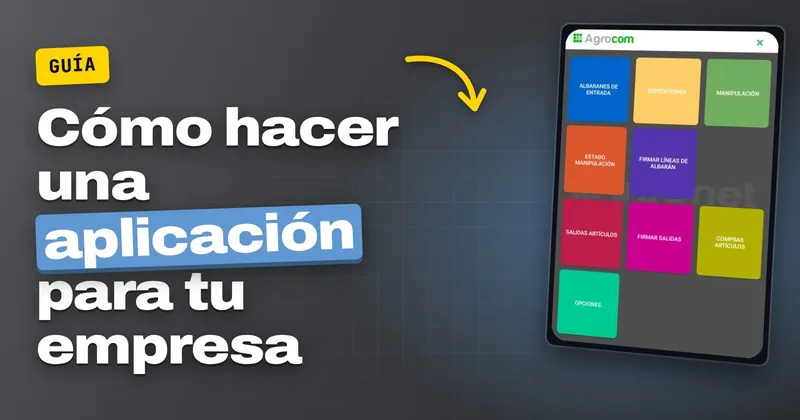
- Your field, site or route staff need a very specific tool on their phones, and generic apps either offer too much or too little.
- You need reports or indicators that only make sense for your business.
In return, bespoke software demands analysis time on your part, a larger initial investment and a careful choice of who builds it, because that company will be the one maintaining it.
Summed up in a table, the three options compare as follows:
| Aspect | Off-the-shelf | Bespoke | Configurable industry-specific |
|---|---|---|---|
| Fit with your process | You adapt | The software adapts | High, through configuration and customisation |
| Time until you can use it | Short | The length of the development | Intermediate |
| Initial investment | Low | The highest | Intermediate |
| Future changes | Depend on the vendor | You request them | Configuration or bespoke development |
| Main risk | Processes left outside | Poor analysis or the wrong supplier | Forcing the software into something outside its sector |
Questions to help you decide
Answer these questions with the people who will actually use the software, not just with management:
- Which part of your work is the same as at any other company? For that part, off-the-shelf software is usually enough.
- Which part is unique to you and sets you apart? That is where bespoke or industry-specific software adds value.
- How many hours a week go on moving data by hand? Make an honest estimate. It is the hidden cost of not having the right software.
- What happens if the software does not do something? If the answer is "we note it down in an Excel sheet", that is acceptable for secondary tasks, but not for core ones.
- Is there software for your sector? Before commissioning development from scratch, check whether a configurable product already covers most of what you need.
- Who will maintain the software in five years' time? Whether it is off-the-shelf or bespoke, the supplier's continuity matters.
A mixed approach is often the right one
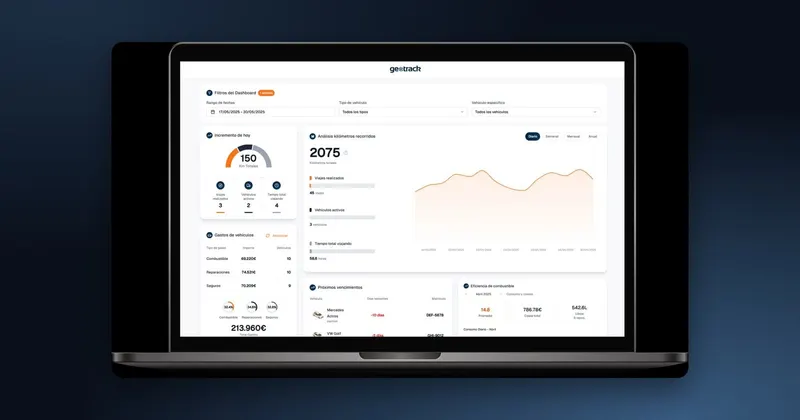
For many companies the answer is not one or the other but a combination: accounting and payroll in off-the-shelf programs, the core of the business in industry-specific or bespoke software, and connections between them so that data is never typed in twice. What matters is that the pieces fit together: that invoices flow into accounting automatically, that machine data comes in without manual intervention and that management can see a dashboard with everything in one place.
Approaching it this way narrows the bespoke project down to what genuinely needs it, which is cheaper and quicker to get up and running. You can see how a project of this kind is approached on the bespoke software development page.
Common mistakes when choosing
- Choosing based on the demo. A demo shows what the software does well. Ask to see your own case, with your own documents.
- Thinking that bespoke means starting from zero. Many developments start from an existing base that is then adapted.
- Asking for bespoke what is standard. Developing your own accounting system rarely pays off.
- Not involving your staff. Software that your team does not want to use will fail, whether it is off-the-shelf or bespoke.
How we handle it at Infonet
At Infonet Consultores we work across all three routes. We offer off-the-shelf software for payroll, accounting, attendance and van sales; we have industry-specific applications for agriculture and warehouse management, concrete and aggregates, industry and businesses, easy to adapt thanks to their configurability and our customisation service; and we develop bespoke software when what you need does not exist. Many of the applications in our catalogue began as developments for a single client. Everything is done by our own team, which also takes care of linking the software with your accounting, e-signature, e-invoicing and whatever else you already have in place. You can find the full catalogue on the home page.